
The Fit
The deal isn't lost. It's stuck. Different problem.
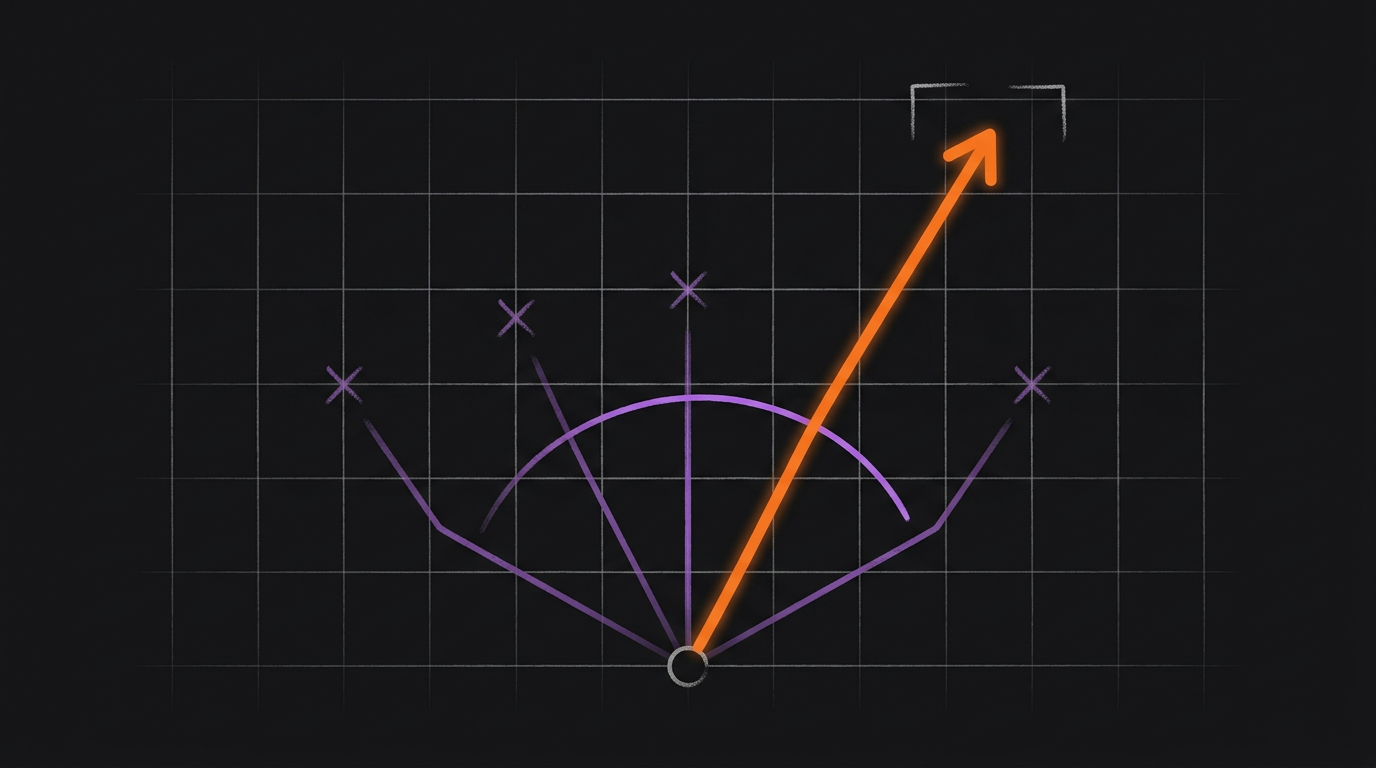
The Fit is DeckShift's decision pattern: built for the deal stalled on indecision rather than rejection. Judge whether the buyer is stuck, recommend one path with confidence, narrow the options, and take the risk of choosing wrong off the table. It condenses the decision-science school: the JOLT research on why "I need to think about it" costs more revenue than "no," Kahneman and Tversky's finding that losses loom roughly twice as large as gains, and Schwartz's evidence that abundant options paralyze rather than liberate.
The psychology of the stance
The decision-science school starts from a finding that inverts conventional sales instinct: once purchase intent exists, the buyer's governing question silently flips from "how do we win?" to "how do we avoid failure?" And selling harder at that moment makes it worse, because every additional benefit raises the stakes of choosing wrong. Prospect theory explains the asymmetry: the imagined loss from a bad choice outweighs the equivalent gain from a good one, roughly two to one. And the choice research adds the final trap: more options don't reassure an anxious chooser, they multiply the ways to fail and pre-load the self-blame. The Fit works because it attacks the fear directly: fewer paths, one confident recommendation, and a floor under the downside.
The arc
The buyer experiences it the way they'd experience a film.
The stalled third act. The deck names what's actually happening: the buyer agrees, has budget, and still hasn't signed. Then it says the quiet part: this isn't doubt about the product, it's fear of owning a mistake.
The narrowing. Options come off the table on the record: three configurations become one recommended path, chosen for this buyer's specific situation, with the reasoning shown. The deck performs the judgment the buyer has been dreading having to perform alone.
The floor. The close removes the downside of being wrong: the pilot period, the parallel run, the guarantee, whatever makes the worst case survivable. The deal closes not because desire increased but because fear ran out of places to live.
Prospect fit
A buyer who already wants to move (interest expressed, budget real, authority present) and has gone quiet anyway. Often someone for whom this purchase is career-visible: the fear isn't "will this work," it's "what happens to me if it doesn't."
Opportunity fit
Stalled late-stage deals, the went-quiet-after-a-great-call pattern, renewals and expansions where the incumbent's inertia is really fear of change, and committee purchases where nobody wants to own the recommendation. This is a rescue pattern: it presumes a deal already in motion. Weak fit early. There's no indecision to resolve before there's a decision on the table.
Where it doesn't work
Early-stage deals where the buyer hasn't been persuaded the problem matters. The Fit de-risks a choice; it cannot create the desire to choose.
Where people commonly fail
Making the recommendation but leaving every option technically on the table "to be safe", which quietly undoes the entire de-risking effect the pattern depends on.
The one thing to remember
Limiting the options is the mechanism, not garnish. A confident recommendation delivered alongside four still-open alternatives doesn't reduce the fear of choosing wrong. It multiplies the choices the buyer is afraid of.
ERP replacement, mid-size manufacturer
A rep on an ERP deal that's been "almost there" for eight months stops re-pitching features. The deck names the real situation: the operations VP agrees, has budget, and hasn't signed, because a botched ERP switch is a résumé-defining mistake. Three configuration options drop to one recommended path based on their plant layout, and the close is a 90-day parallel run: both systems side by side, walk away free if the new one isn't clearly better. The fear addressed was never "does this ERP work." It was "what happens to me if I'm wrong."
Why this pattern works
What the nerds love about The Fit: it's the only pattern aimed at the deal you'd otherwise lose to silence. No new pipeline, no new persuasion: it walks back into the stalled pile and closes deals that every classical playbook had already given up for dead. The most profitable pattern per slide in the whole set.