
The Bridge
Measure the distance. Then build the way across.
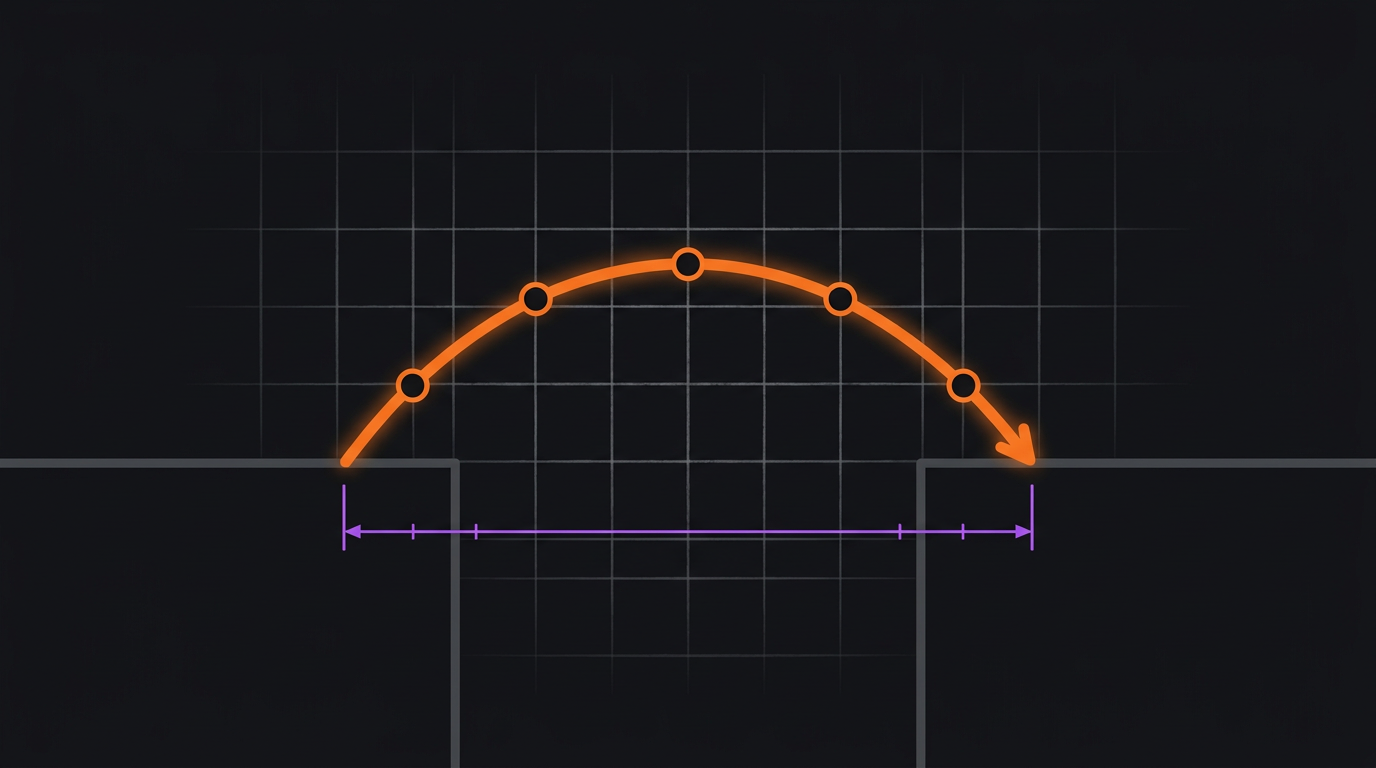
The Bridge is DeckShift's diagnostic pattern: establish exactly where the buyer stands, exactly where they want to be, and put a number on the distance between the two. Then present the offer as the engineered span across that measured gap. It condenses a half-century-long lineage of diagnostic selling, from Mack Hanan's consultative turn in 1970 through Keenan's Gap Selling, with Jobs To Be Done's insight that under every purchase is a job the buyer is hiring for.
The psychology of the stance
Two findings from the diagnostic school anchor this pattern. First, buyers stall not because they object but because they're unconvinced change is necessary. Resistance is confusion about necessity, not disagreement about features. Second, people feel in control when the case is built from their own numbers: a gap measured in the buyer's own units isn't the rep's claim to accept or reject, it's the buyer's reality reflected back with arithmetic attached. The pattern converts a persuasion problem into a measurement problem, because measurements are harder to argue with than adjectives.
The arc
The buyer experiences it the way they'd experience a film.
The surveyor's opening. The deck maps the buyer's current state in their own operational language, precisely enough that the buyer catches themselves nodding. No villain yet, just an honest map.
The chasm appears. Between the mapped present and the stated destination, the deck measures the distance: hours, dollars, error rate. Then it digs beneath the first-stated symptom to the root cause underneath. The tension isn't manufactured; it's arithmetic the buyer can check.
The span. The offer arrives not as a product tour but as the specific mechanism engineered across this specific gap. And the close is the crossing: what changes, by how much, measured in the same units the gap was.
Prospect fit
A buyer who already feels the problem and can get at the data: an operator or owner whose pain shows up somewhere in their own systems, and who will respect a case built from their numbers more than a case built from your enthusiasm.
Opportunity fit
Mid-to-late-stage deals with measurable operational or financial pain, a business case to justify, and a numbers-literate approver behind the champion. If a CFO will eventually read this deck, The Bridge is speaking their native language. Weak fit for greenfield or visionary deals with no current-state baseline. You cannot quantify a gap to nowhere.
Where it doesn't work
Early, exploratory conversations where the buyer hasn't yet admitted a problem exists. Quantifying an unadmitted problem reads as presumptuous and invites the buyer to argue with your arithmetic instead of the problem.
Where people commonly fail
Skipping the root-cause step and quantifying the surface symptom. The number is technically true but doesn't survive contact with a buyer who knows the real cause sits one level deeper.
The one thing to remember
The gap must be quantified in the buyer's units, not the seller's. "This will save you time" is not a gap. "Your team spends 11 hours a week on this, worth about $47K a year" is.
Payments reconciliation, multi-location restaurant group
A rep pitching a reconciliation platform to a 40-location restaurant group doesn't open with "manual reconciliation is error-prone." She opens with the controller's own numbers: three finance staff spend a combined 26 hours a week matching POS deposits to bank statements by hand, roughly $71,000 a year, before counting last quarter's two uncaught write-offs. The root cause isn't "reconciliation is hard"; it's that each location's POS exports a different format and nobody owns normalizing them. The platform is introduced as the thing that closes the format gap, not as "better software."
Why this pattern works
What the nerds love about The Bridge: it's the pattern that respects the buyer's intelligence most. No theater, no manufactured urgency: just a measurement honest enough that the deck could be handed to the buyer's own analyst and survive. When it wins, it wins on math.