
The Pushback vs. Epic Tale
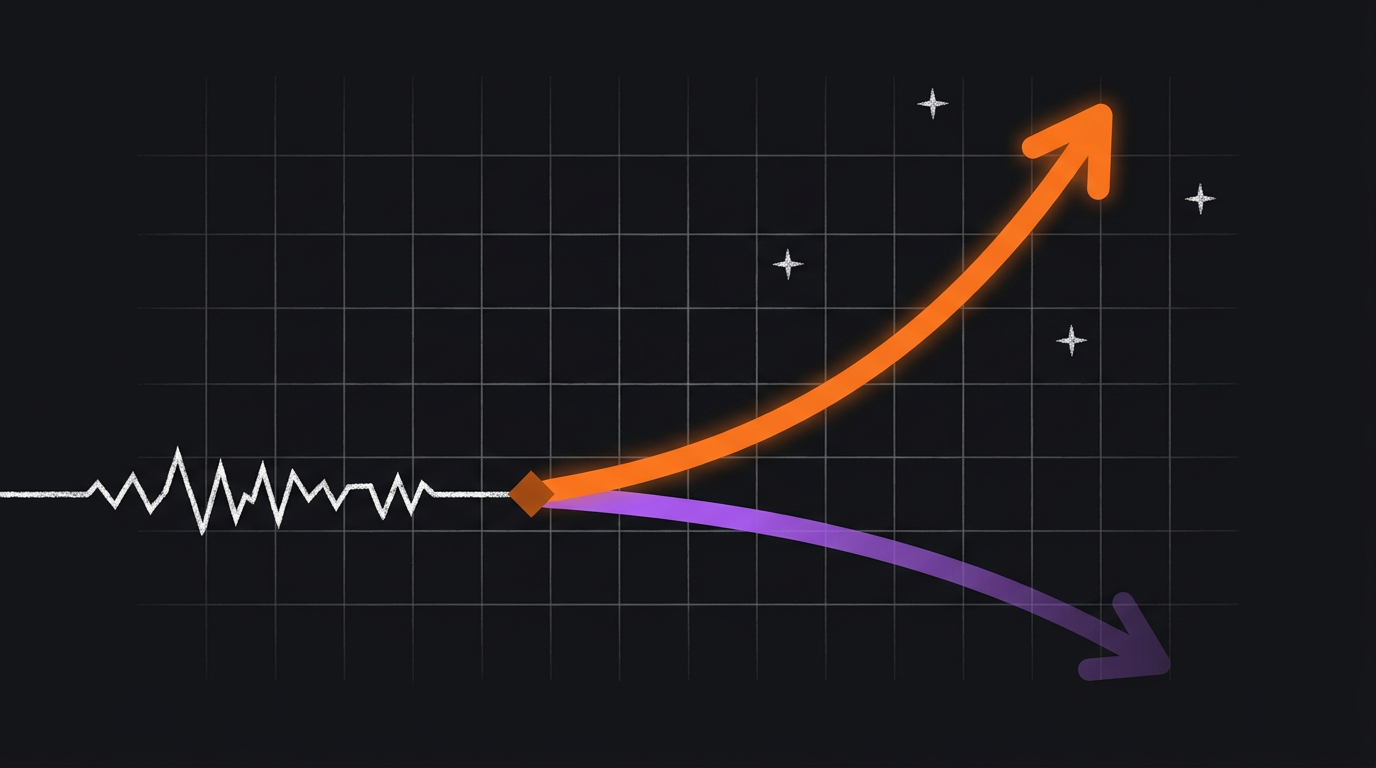
The Pushback and Epic Tale are the six's two reframing patterns: both walk in claiming the buyer's picture of reality is out of date. The difference is scope and posture: The Pushback delivers a private correction about the buyer's own business; Epic Tale narrates a public shift in the whole market. One says "you're wrong"; the other says "the world moved."
Why the pattern matters
A Pushback deck says: the belief your business operates on has expired, and here's evidence about you. An Epic Tale deck says: a change is rolling through this industry, and everyone gets sorted by it. Here's the map. The first puts the buyer's own judgment on the table; the second puts them in the audience of something bigger.
That difference in posture changes what the buyer defends. A challenged belief invites personal defensiveness: handled well, that's the productive tension. A narrated shift invites none: nobody feels accused by a storm. Choosing between them is choosing how much friction the reframe should carry.
A private correction that's really a market fact
Framing an industry-wide shift as "your belief is outdated" personalizes what didn't need personalizing: the buyer defends their judgment instead of examining the evidence, and tension that could have been productive turns adversarial for no gain.
A market story that's really one buyer's problem
Inflating a company-specific insight into "the world is changing" overclaims, and buyers check. If the shift isn't visible outside the vendor's own slides, the whole narrative collapses, and takes the genuinely useful insight down with it.
Scope the reframe wrong and the evidence doesn't matter: the buyer is reacting to the posture before they ever weigh the proof.
The route each one runs
Each pattern has a characteristic route: where the deck starts, where the pressure builds, and what the buyer is holding at the end.

| Dimension | The Pushback | Epic Tale |
|---|---|---|
| Scope of reframe | The buyer's businessA belief about their own operation | The whole marketA change nobody opts out of |
| Posture | CorrectionYou're operating on expired data | NarrationThe ground moved under everyone |
| Friction | DeliberateProductive tension is the mechanism | MinimalRep and buyer watch the storm together |
| Evidence type | About the buyerTheir audit, their cost, their blind spot | About the worldWinners and losers already visible |
| Natural champion | The operatorActs on the corrected belief | The executiveActs on the market map |
| Risk if misapplied | DefensivenessThe buyer defends their judgment | OverclaimA shift nobody else can see |
Choose The Pushback if
- The expired belief is specific to this buyer, not the market
- The buyer is senior enough to metabolize a direct challenge
- Your evidence is about their operation: audit gaps, cost blind spots
- A private correction would be a relief, not an embarrassment
Choose Epic Tale if
- The shift is real and externally verifiable: anyone can check
- The buyer's own customers are already behaving differently
- The deal needs an executive sponsor who thinks in market position
- The budget line must be created, not competed for
How they actually differ
Both patterns weaponize the same fear, being wrong about reality, but they aim it differently.
The Pushback makes it personal on purpose. The insight is about this buyer: their audit posture, their cost structure, their blind spot. Precision is the power: an insight that could open any deck in the category reframes nobody. The tension of being specifically, evidencedly wrong is what breaks the old checklist's grip.
Epic Tale keeps it impersonal on purpose. The shift belongs to history, not to the buyer's failings: they aren't wrong, they're early or late. Loss aversion does the work the personal challenge would have done: being sorted onto the losing side of a visible change is fear enough, and the vendor never had to accuse anyone of anything.
Size the reframe honestly: real market shifts deserve the Epic Tale stage, and buyer-specific insights deserve Pushback precision: inflating one into the other is how both fail. For the full breakdown of either pattern, the psychology, the arc, and the lineage it condenses, see The Pushback and Epic Tale in Pitchcraft.