
The Bridge vs. Epic Tale
The Bridge and Epic Tale argue at two different altitudes. The Bridge makes a company-level case: your specific gap, measured in your own numbers. Epic Tale makes a market-level case: the world has shifted, and the cost of missing the turn. One convinces an operator with arithmetic; the other convinces an executive with history.
Why the pattern matters
The same product can be pitched from the ground or from orbit. A Bridge deck says: your team spends 26 hours a week on this and it costs $71K a year. An Epic Tale deck says: the whole industry is moving, the early movers are already winning, and here's the map across. One is an audit; the other is prophecy with evidence.
Altitude has to match the audience and the budget. Operational buyers with existing budget lines respond to measured gaps; executive buyers creating a budget line respond to shifts they can't afford to miss. Pitch orbit to an operator and it's hand-waving; pitch arithmetic to a visionary and it's small.
Arithmetic in a category that doesn't exist yet
A gap analysis needs a current-state baseline, and budget-creation deals often have none: you cannot quantify the distance to a destination the buyer hasn't accepted exists. The numbers end up measuring the wrong journey.
A manufactured shift
Epic Tale's credibility rests entirely on the opening shift being true independent of the vendor. Forcing "the world is changing" onto a stable category collapses within a slide, and takes the rest of the deck's credibility down with it.
Altitude errors are quiet ones: nobody tells a vendor their deck was too small or too grand. The follow-up just never comes.
The route each one runs
Each pattern has a characteristic route: where the deck starts, where the pressure builds, and what the buyer is holding at the end.
| Dimension | The Bridge | Epic Tale |
|---|---|---|
| Altitude | Company-levelYour gap, your numbers | Market-levelThe industry's turn, everyone's stakes |
| Opening move | The map of nowThe buyer's current state, precisely | The shiftA change nobody can opt out of |
| Evidence source | The buyer's systemsInternal, checkable | The marketExternal, already visible |
| Natural buyer | OperatorOwns the pain and the data | ExecutiveOwns the market position |
| Budget situation | ExistsThe line item is already there | CreatedThe deck argues it into existence |
| Risk if misapplied | Too smallArithmetic can't fund a vision | InflatedA shift that isn't real reads instantly |
Choose The Bridge if
- The pain is operational and measurable today
- A budget line for this already exists
- The approver is a numbers reader, not a market thinker
- The current state is stable enough to baseline
Choose Epic Tale if
- A real market shift is underway: regulatory, technological, generational
- The budget line doesn't exist yet and must be argued for
- The buyer thinks in market position, not workflow
- The buyer's own customers are already living the change
How they actually differ
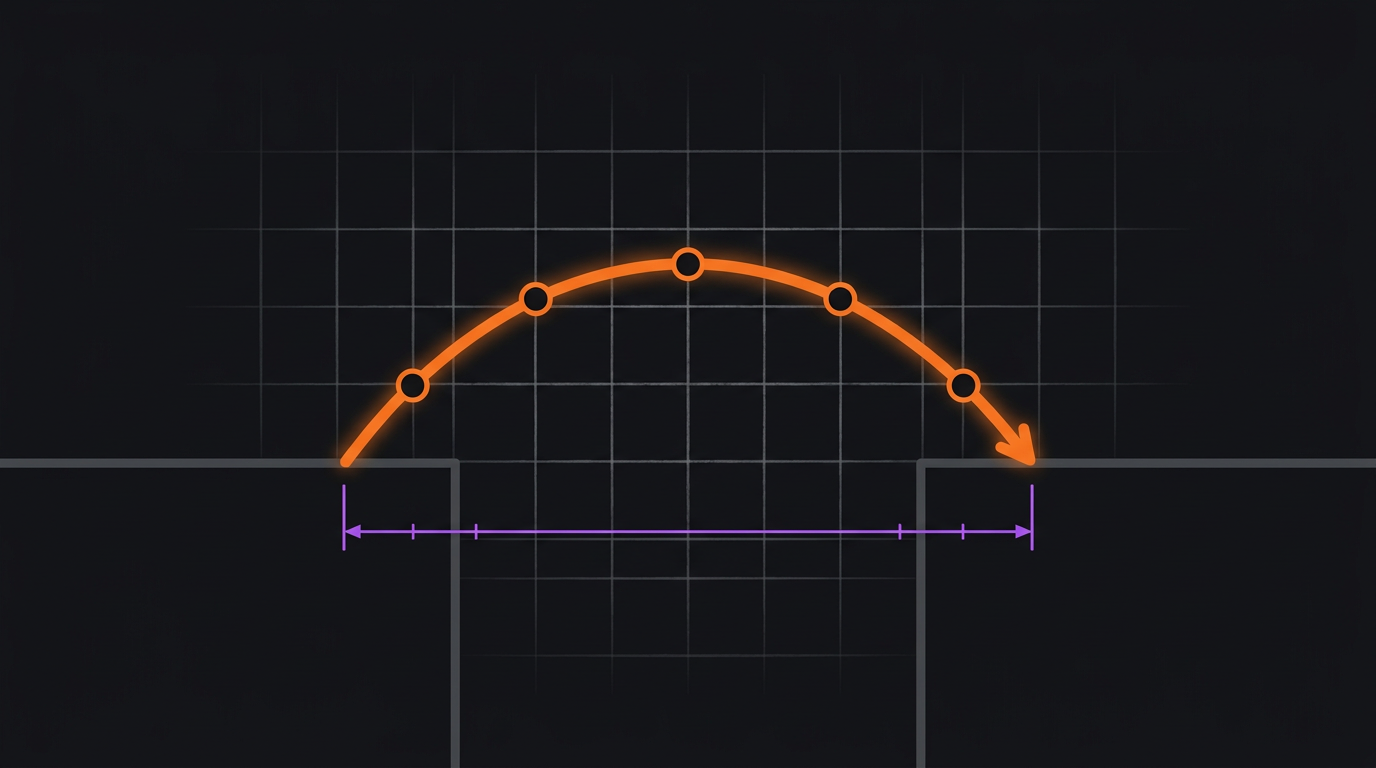
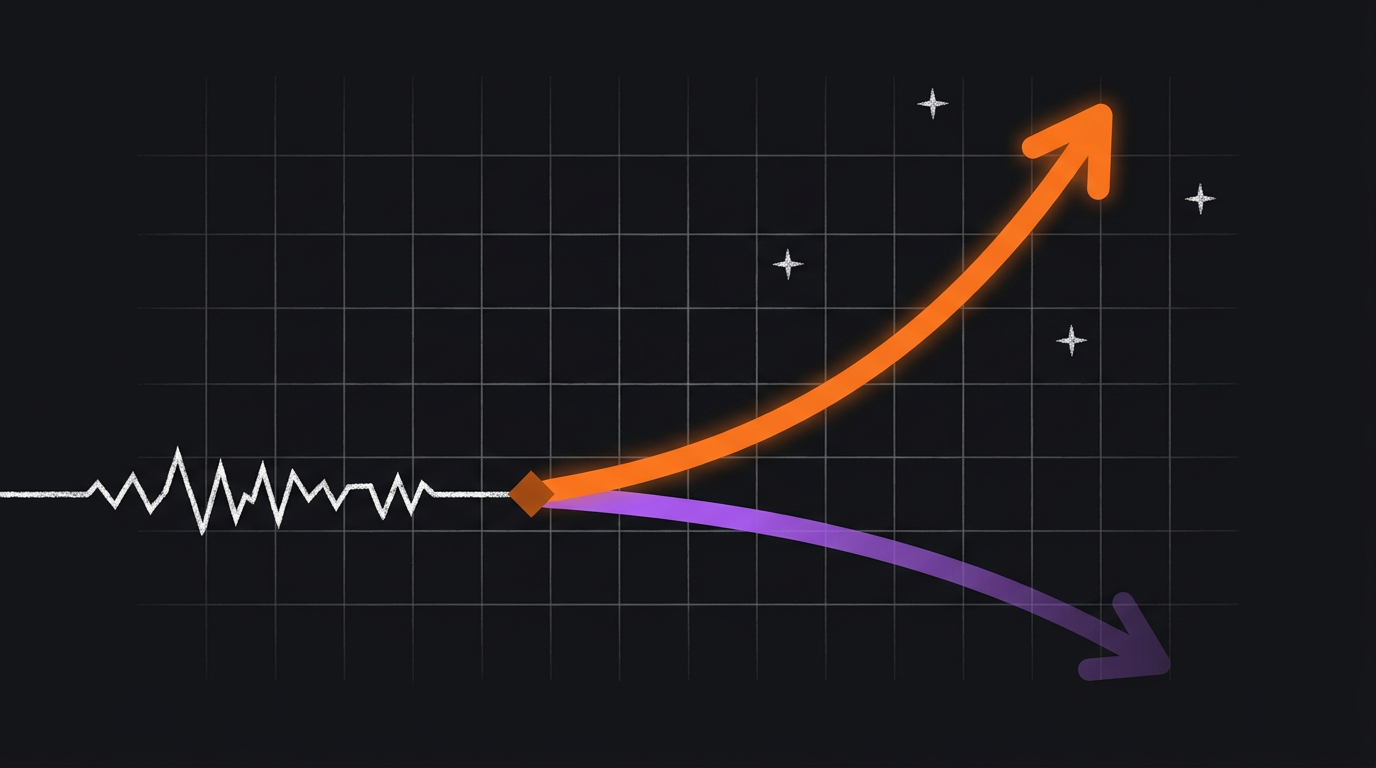
Both patterns end at the same slide, the offer as the way across, but they dig the chasm in completely different places.
The Bridge digs the chasm inside the buyer's own business. The distance is between the buyer's current state and their stated destination, measured in hours, dollars, or error rate from their own systems. It's the smallest-scope, highest-precision pattern in the six: nothing in it requires the world outside the buyer's walls to be doing anything at all.
Epic Tale digs the chasm through the whole market. The distance is between the old world and the new one, and the buyer's position in that sorting is the stake. Precision gives way to stakes: the deck's power comes from the shift being visibly real and bigger than any vendor, which is why it can create budget where none existed.
Altitude can also shift mid-cycle: an Epic Tale opening to win the executive sponsor, then Bridge arithmetic when their operators are sent to verify. For the full breakdown of either pattern, the psychology, the arc, and the lineage it condenses, see The Bridge and Epic Tale in Pitchcraft.