
The Mission vs. TURN
The Mission and TURN both put the buyer at the center, but they center different faculties. The Mission centers the buyer's identity: you are the hero; here's the map. TURN centers the buyer's reasoning: here are the questions; you draw the conclusion. One wins by making yes feel safe, the other by making yes feel self-authored.
Why the pattern matters
A Mission deck says: you're the hero of this story, and the guide has a three-step plan. A TURN deck says: walk with me through what's happening, what it causes, and what solving it would be worth: you tell me. Both refuse to make the vendor the protagonist; they differ in what they hand the buyer: a map, or a staircase.
The choice turns on what the buyer is short of. An overwhelmed buyer is short of clarity: handing them Socratic questions adds work. An unconvinced buyer is short of conviction: handing them a simple plan skips the persuasion. Map the deficit before picking the pattern.
A map for the unconvinced
The Mission assumes the buyer already wants out of their situation: it simplifies the exit. Aimed at a buyer who hasn't yet connected their situation to a felt cost, the beautiful three-step plan answers a question they weren't asking, and clarity lands as irrelevance.
A staircase for the exhausted
TURN assumes the buyer has energy for a guided reasoning process. An overwhelmed operator doesn't want to derive the conclusion: they want someone to have derived it already. Discovery questions aimed at a drowning buyer feel like homework from a vendor who should be helping.
The deficit is diagnosable in the first ten minutes of any discovery call: what buyers volunteer first is almost always what they're short of.
The route each one runs
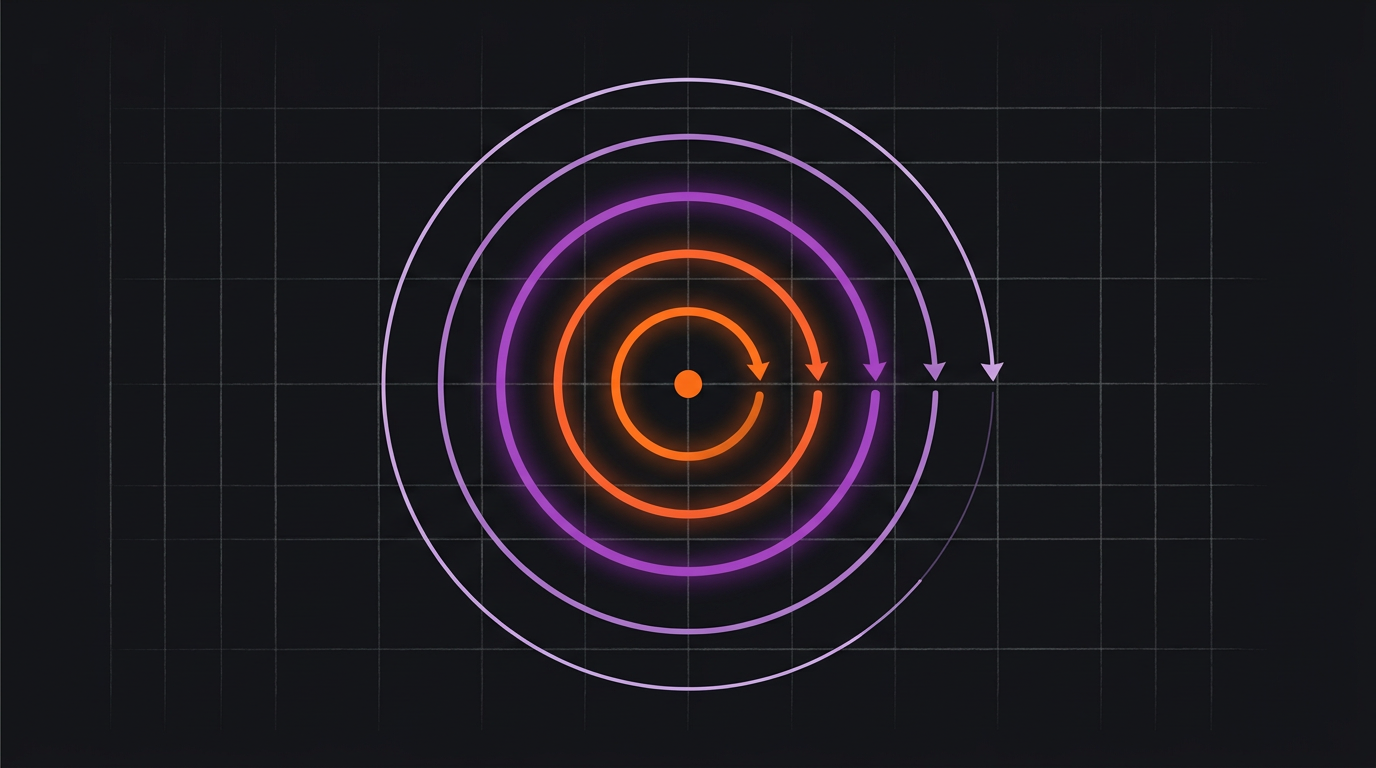
Each pattern has a characteristic route: where the deck starts, where the pressure builds, and what the buyer is holding at the end.

| Dimension | The Mission | TURN |
|---|---|---|
| Centers the buyer's | IdentityThe hero of the story | ReasoningThe author of the conclusion |
| What the buyer receives | A mapThree steps, visibly safe | A staircaseQuestions building to their own answer |
| Buyer's deficit | ClarityKnows it's wrong, can't see the path | ConvictionDoesn't yet feel what it costs |
| Deck's talkativeness | Tells a storyStructured, warm, directive | Mostly asksThe buyer talks more than the deck |
| Pace | Quick to landOne clean narrative arc | Slow by designThe staircase can't be rushed |
| Risk if misapplied | Irrelevant clarityA map nobody asked for | Exhausting inquiryHomework for a tired buyer |
Choose The Mission if
- The buyer already feels the pain and is overwhelmed by options
- Simplicity would itself differentiate you
- The buyer needs to feel understood, then guided
- The sale is emotional under its rational surface
Choose TURN if
- The buyer hasn't yet connected their situation to a cost
- There's time and appetite for real dialogue
- The conclusion must survive internal re-pitching
- The buyer resists being told but enjoys concluding
How they actually differ
Both patterns descend from the same humility, the vendor is not the story, but they spend that humility differently.
The Mission spends it on comfort. The guide posture exists to make the buyer feel capable and safe: your problem is understandable, the path is short, the first step is small. All the deck's craft goes into subtraction: fewer steps, fewer words, one call to action, because the enemy is the buyer's overwhelm.
TURN spends it on ownership. The questioning posture exists to make the buyer feel intelligent and in control: you saw the problem, you totaled the cost, you named the need. The deck's craft goes into sequence: which question, in which order, because the enemy is the buyer's detachment, and self-authored conclusions are the cure.
A useful shorthand: The Mission is for buyers who say "I know, I know, but where do I even start?" and TURN is for buyers who say "I'm not sure this is really a problem." For the full breakdown of either pattern, the psychology, the arc, and the lineage it condenses, see The Mission and TURN in Pitchcraft.